
Washington Crossing Project – Mid City, Los Angeles
Affordable Housing Development – 56 Units
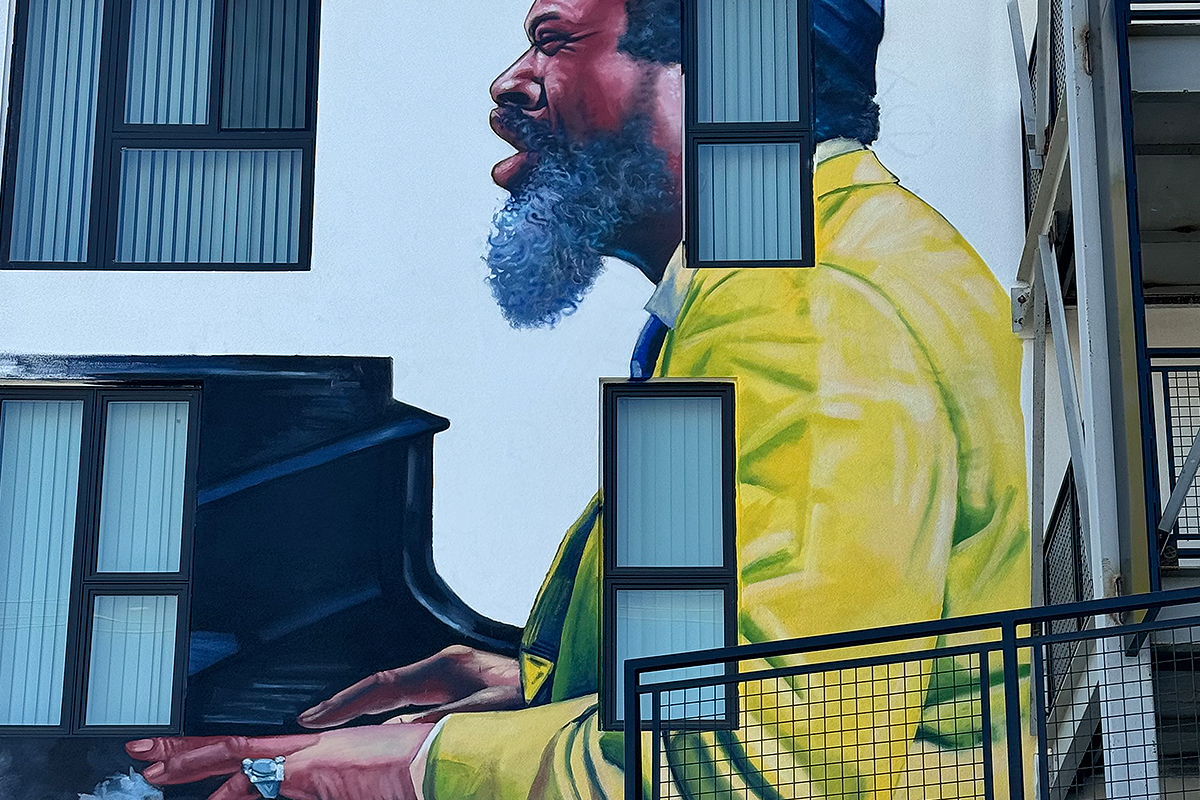
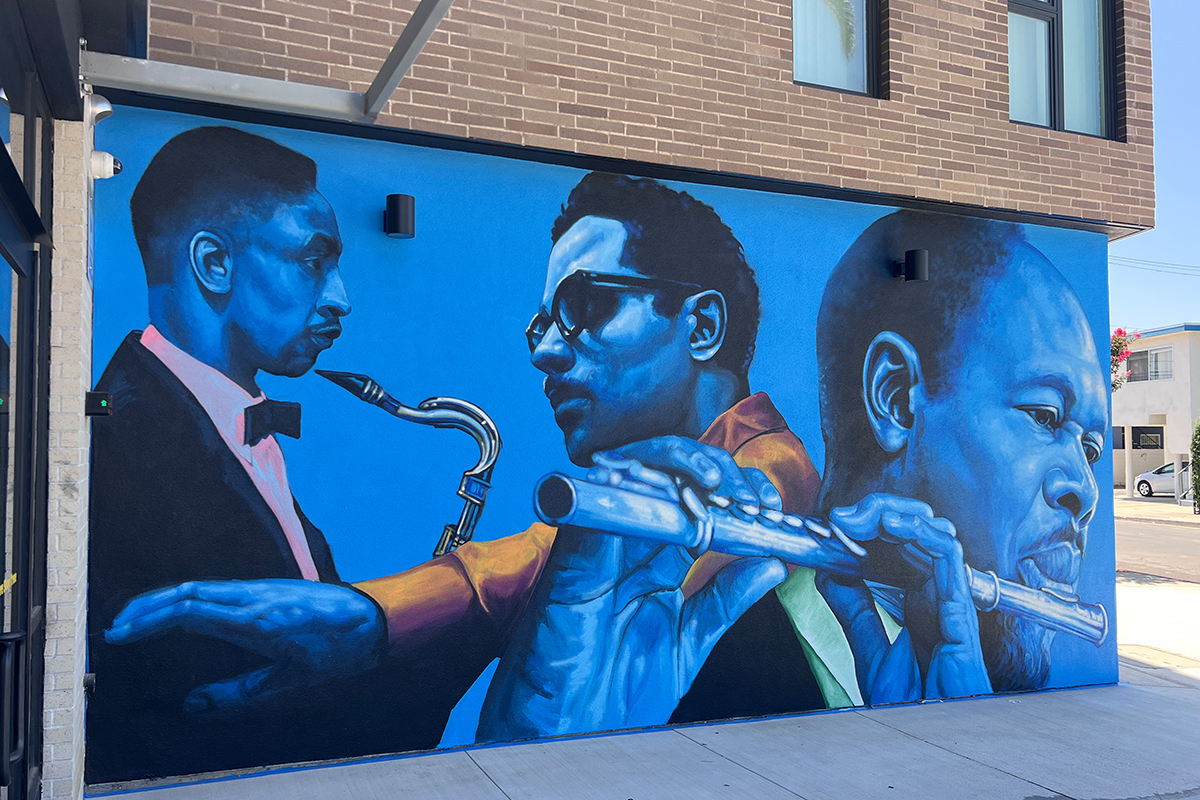
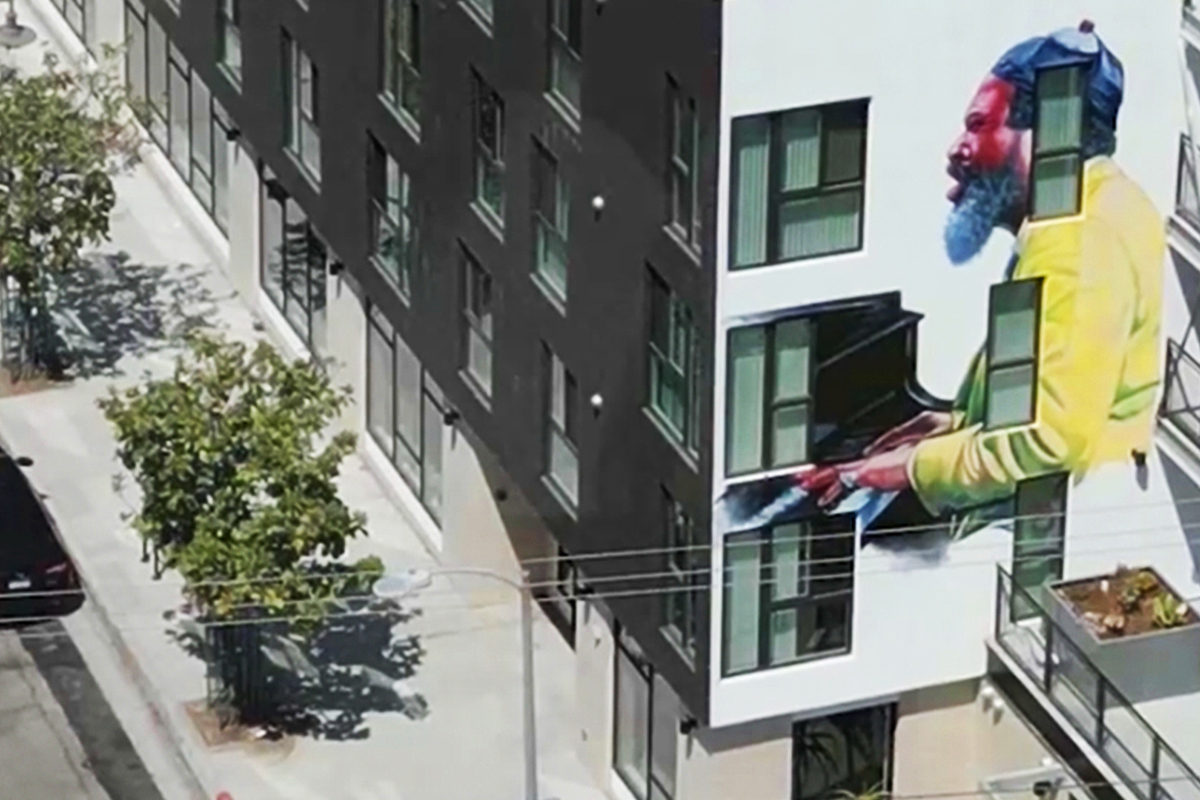
Partnering with a forward-thinking affordable housing developer, Heavens Media led the production of two murals paying tribute to Mid City’s deep-rooted connection to Los Angeles’ jazz history. Located along Washington Blvd., this stretch was once home to legendary music venues including:
The Hillcrest Club – Birthplace of free jazz, led by Ornette Coleman.
The Metro Theater (now Nate Holden Performing Arts Center) – Known for post-show jam sessions.
The It Club – Hosted performances by icons like Miles Davis, John Coltrane, and Thelonious Monk, who recorded his 1964 album Live at the It Club here.
The vision was to celebrate this cultural legacy through powerful public art integrated into the fabric of a newly-completed 56-unit housing development.
In fulfilling this vision, Heavens Media commissioned Ernest Shaw Jr., a Baltimore-based muralist known for honoring Black cultural icons and community leaders. Shaw’s portfolio of expressive, large-scale portraiture made him the perfect choice to anchor the site in both history and pride.
Mural 1 | Thelonious Monk Tribute
Towering four stories above Washington Blvd., this mural features jazz pioneer Thelonious Monk in a vibrant, eye-catching portrait. The piece visually anchors the building with its homage to the historic It Club, serving as a monumental acknowledgment of this neighborhood’s influence on L.A.’s jazz scene of the 1950s and ’60s.
Mural 2 | Entryway Portraits
Located at the building’s main entrance, this mural features three Los Angeles jazz greats who also graced the stage of the It Club.
Teddy Edwards (1924–2003) – Saxophonist known for recording the first bebop tenor sax solo.
Hampton Hawes (1928–1977) – Influential pianist and author.
Buddy Collette (1921–2010) – Grammy-nominated
A multi-instrumentalist, educator, and the first Black musician to broadcast from a TV studio. Together, the murals celebrate the transformative power of jazz and preserve the cultural memory of a neighborhood in transition.